Whippet Grooming: Gentle Coat Care and Comfortable Nails
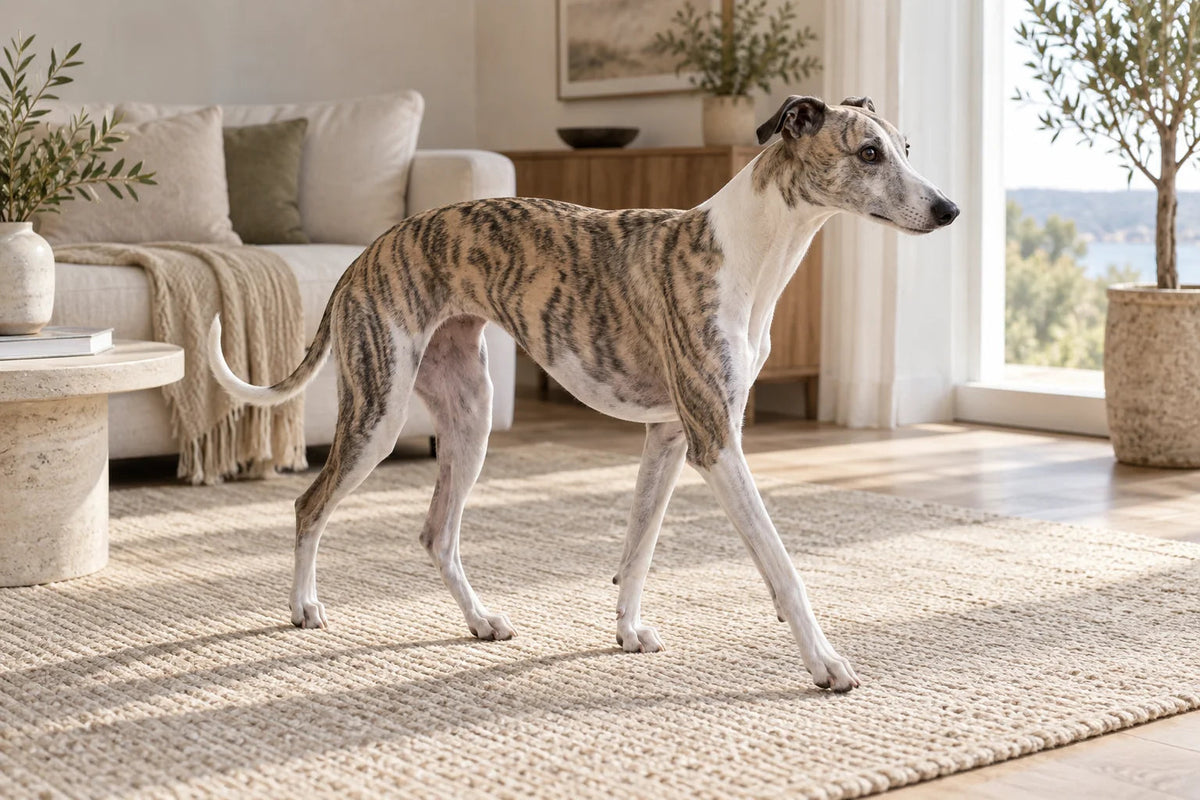
A Whippet's grooming routine should feel almost as light as the coat itself. There is no long fringe to sculpt and no dense jacket to strip out. The useful work is gentle coat care, clean equipment and comfortable feet.
The trap is mistaking a simple coat for a reason to do nothing, or trying to make a short grooming session more effective by using a harsher tool. A soft touch and regular checks are the better combination.
A Whippet does not need a routine body clip. Keep the natural short coat, lift away loose hair gently and spend the saved time on calm foot handling and nail maintenance.
Choose a brush for the coat you can see
The AKC Whippet profile describes a short, smooth coat with modest grooming needs: regular brushing and occasional bathing. A dense-coat rake or aggressive scraping tool is unnecessary for this surface.
A soft bristle brush or gentle grooming mitt is a sensible starting point. Test the pressure on your own forearm first, then use light strokes in the direction of hair growth. Let the dog's response guide you: leaning away, repeated turning or skin becoming pink means it is time to stop.
Do not try to collect every loose hair in one sitting. Short hairs will still shed between sessions. A clean cloth and a brief brush are useful precisely because they are easy to repeat without irritating the dog.
A short routine with a clear route
- Begin on the shoulder or side where the dog enjoys being touched.
- Brush the back and sides lightly, clearing collected hair from the brush.
- Use an especially soft touch over the chest, belly and legs.
- Remove the harness or collar when safe and check the coat beneath it.
- Finish with a look at the paws and nails.
Give your Whippet good footing. A floor mat can be more comfortable than an unfamiliar raised table, particularly for an owner working alone. Do not make the dog balance on a slippery surface while you lift a foot.
The session is also a chance to notice changes from normal. If an area is sore, damaged or unexpectedly sensitive, stop grooming it and seek appropriate advice. Brushing harder is not a way to investigate a skin problem.
Check what sits against the body
If your Whippet wears a coat or jumper, remove it after use and inspect the contact areas. Look around the neck opening, chest, armpits and any seams. Grit trapped in a comfortable-looking garment can still rub.
Dry wet clothing separately and check its care instructions. Do not put a dirty or damp layer straight back onto a freshly washed dog. Repeated rubbing in the same place is a reason to reassess the fit, not to cover the mark with another garment.
This quick equipment check is particularly useful after a muddy walk. Often the dog needs local cleaning of the feet and underside rather than a complete bath.
Make bath day warm, secure and brief
Set out dog shampoo, a non-slip mat and dry towels before bringing the dog in. Use comfortably lukewarm water and follow the shampoo's directions. Keep water and lather away from the eyes and ear openings.
Work gently rather than scrubbing as though there were a thick undercoat to penetrate. Rinse thoroughly, including the underside and the places you supported with your hand. Residue is not extra conditioning.
Blot with a towel and keep the dog comfortable and out of draughts until dry. If using a dryer that the dog tolerates, choose a gentle, comfortably cool setting, keep it moving and avoid the face. Do not use high heat to shorten the job.
Blue Cross explains why washing frequency depends on the dog and its activities. Wash when needed for dirt or contamination rather than treating every week as bath week.
Give the nails their own quiet session
A quick coat routine can leave nails as the part people postpone. Instead, practise touching one foot, rewarding calm behaviour and putting it down before the dog struggles. Build up gradually to seeing the nails clearly.
For a dog accustomed to its sound and vibration, the VUNRO PRO Pet Nail Grinder is an option for controlled, small adjustments. Introduce it away from the foot first. Keep each contact brief so the nail does not become hot, and stop well before the quick.
A grinder is not permission to keep shortening until the nail looks like a photograph. Dark nails and an uncertain stopping point need a demonstration from a competent groomer. A few comfortable nails today are preferable to a struggle over all four feet.
What to do after a rough or muddy outing
Check the paw surfaces and between the toes for ordinary loose debris. Wipe or rinse dirt away gently and dry the feet. If something is embedded, a nail is damaged or the dog will not let you inspect an area comfortably, stop rather than digging or cutting.
Keep your cleaning cloths and brush clean too. A grooming mitt with grit caught in it can turn a pleasant routine into an abrasive one.
Keep the kit proportionate
Most everyday Whippet grooming does not call for blades, guard combs or a haircut. A comfortable soft brush, suitable washing supplies and a nail tool you know how to use cover the practical work. The finish to aim for is a clean natural coat and a dog that remains happy to be handled.
Keep learning
More from the Blade Blog

Chihuahua Grooming: Smooth Coats, Long Coats and Tiny Paws
Read the guide →
Border Terrier Grooming: Keep the Wiry Jacket Comfortable
Read the guide →